



Lusófona University trains more than 160 professionals in animal rescue
CCERRA training strengthens emergency response preparedness among veterinary surgeons, firefighters and security forces
Sustainable Development Goals (SDG)


The Centre of Expertise in Animal Emergency, Rescue and Resilience (CCERRA), part of the Faculty of Veterinary Medicine at Lusófona University, has trained more than 160 professionals from the northern and central regions of Portugal to respond to emergencies involving large animals.
The training sessions took place on 1 and 3 October 2026 in Vila Nova de Gaia and Torres Novas, under the theme of Technical Rescue of Large Animals in Terrestrial and Aquatic Environments. Organised by the Animal Ombudsperson and the Faculty of Veterinary Medicine at Lusófona University, these sessions were held in partnership with the Directorate-General for Food and Veterinary Affairs (DGAV), the National Republican Guard (GNR), the National Fire Service School and local organisations.
The aim was to strengthen coordination between veterinary surgeons, security forces and firefighters, promoting rapid, coordinated and safe responses.
In the north, the theoretical component took place at the Porto Territorial Command of the GNR, while the practical training was held at Areinho de Avintes Beach. Participants included GNR personnel, professional firefighters from Vila Nova de Gaia, Braga, Viana do Castelo and Porto, as well as veterinary surgeons from the region, under the coordination of the DGAV.
In Torres Novas, the sessions took place at the Gustavo Pinto Lopes Municipal Library and the Torres Novas Volunteer Fire Brigade Station, bringing together veterinary surgeons from the central region and firefighters from several municipalities, including Soure, Cartaxo, Carregal do Sal, Pombal, Ferreira do Zêzere, Vouzela, Vila Velha de Ródão, Santarém, Constância, Alcanena, Mação and Torres Novas.
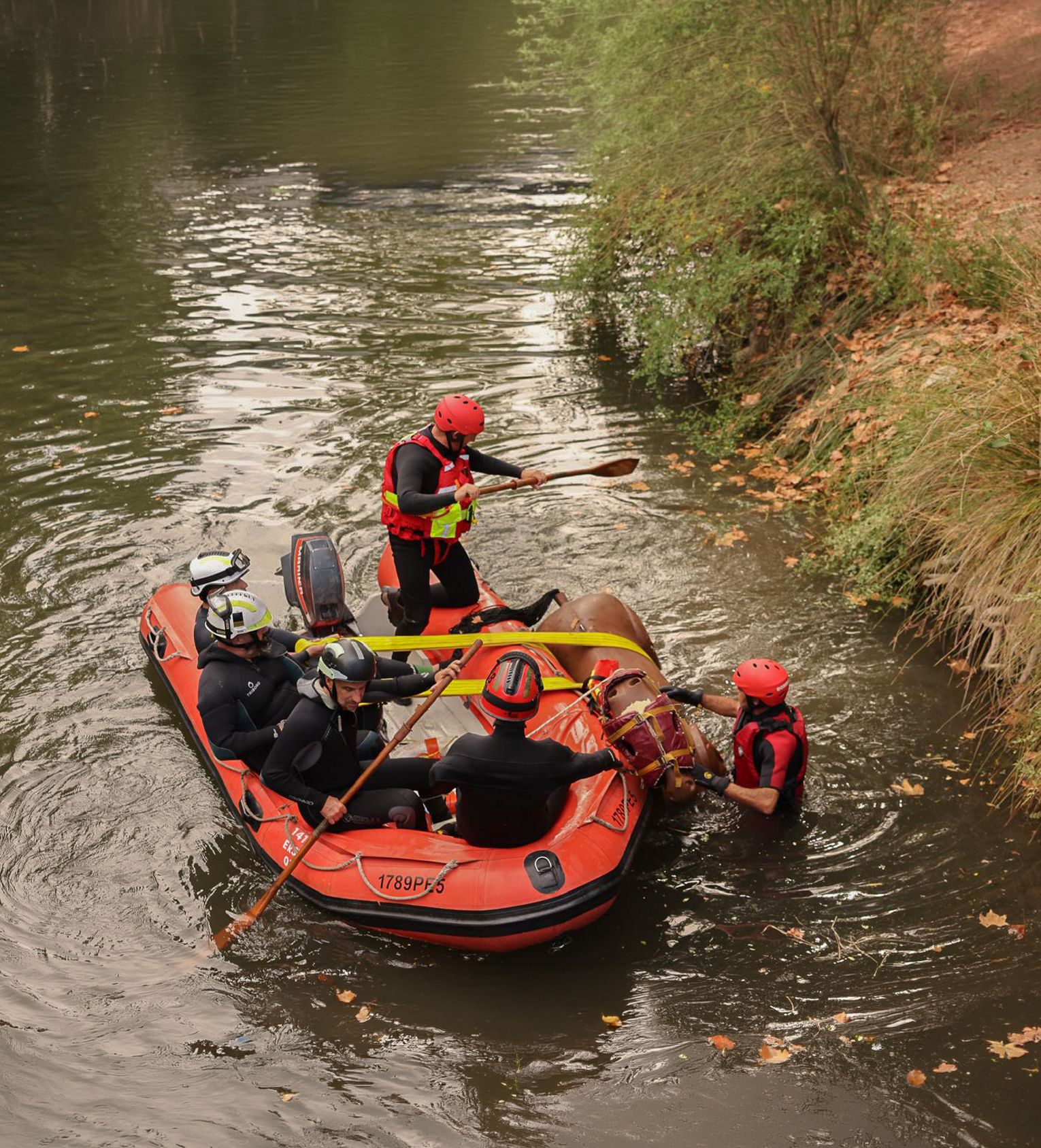
Participants practised procedures for safely assessing, stabilising and rescuing horses, cattle and other large animals in rivers, ditches, ponds, flooded areas, mud and waterlogged terrain. Team safety and animal welfare were priorities throughout all activities.
The training was led by Dr Leonardo Maggio de Castro, a guest lecturer in technical animal rescue at the Faculty of Veterinary Medicine at Lusófona University. He coordinated the rescue of the horse Caramelo during the floods in Rio Grande do Sul. The training also involved Dr Tiago Regis Franco de Almeida, a fire service officer and Course Coordinator at the Higher School of Firefighters.
Established by the Faculty of Veterinary Medicine at Lusófona University, CCERRA aims to develop a permanent capacity for preparedness, training and cooperation to protect animals in emergency and disaster situations. The centre brings together advanced education, research, innovation and operational training, with the aim of becoming a national and international reference in animal rescue, disaster veterinary medicine and disaster risk reduction.
CCERRA's mission is based on five main areas:
- Education and lifelong learning;
- Research and innovation;
- Operational preparedness and emergency response;
- Clinical recovery and animal welfare;
- International cooperation and knowledge transfer.
Guided by the principles of One Health and One Welfare, the centre recognises that protecting animals is directly linked to protecting people, public health and the environment.
This training helps strengthen emergency response capabilities and build safer, more resilient communities.
View all the photographs from this training session on ULusófona's Facebook page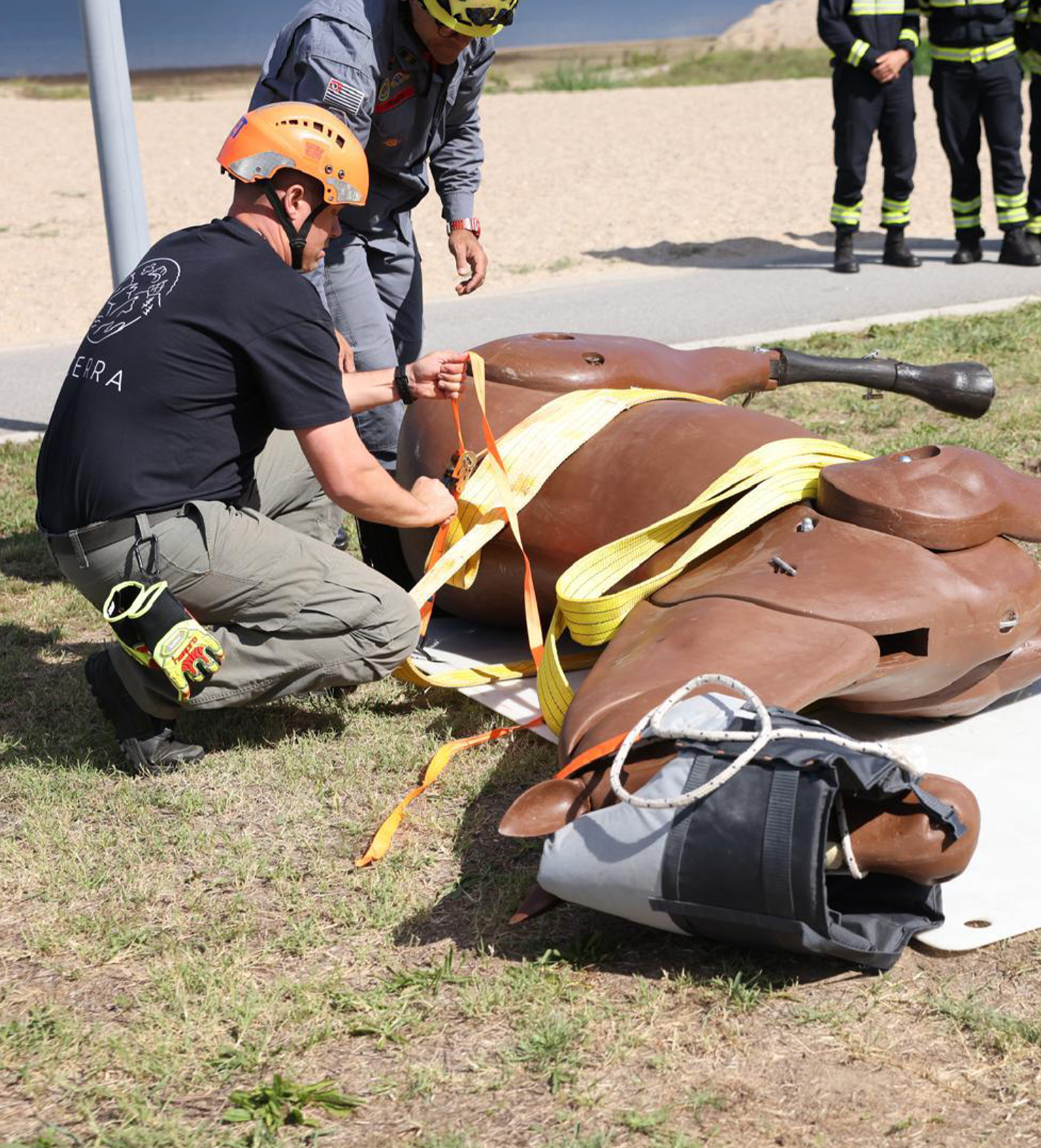
Other News
- EDUCATION CANNOT BE REFORMED WITHOUT DEMOCRATIC PARTICIPATION
- Academic Year Opening Honours Frei Betto and Debates Popular Education
- ULusófona and Paredes Join Forces for Interculturalism
- 2026 Christmas Solidarity Campaign – “This Christmas, Sharing Is Caring!”
- Universidade Lusófona athlete crowned 2026 SUP Wave National Champion









