


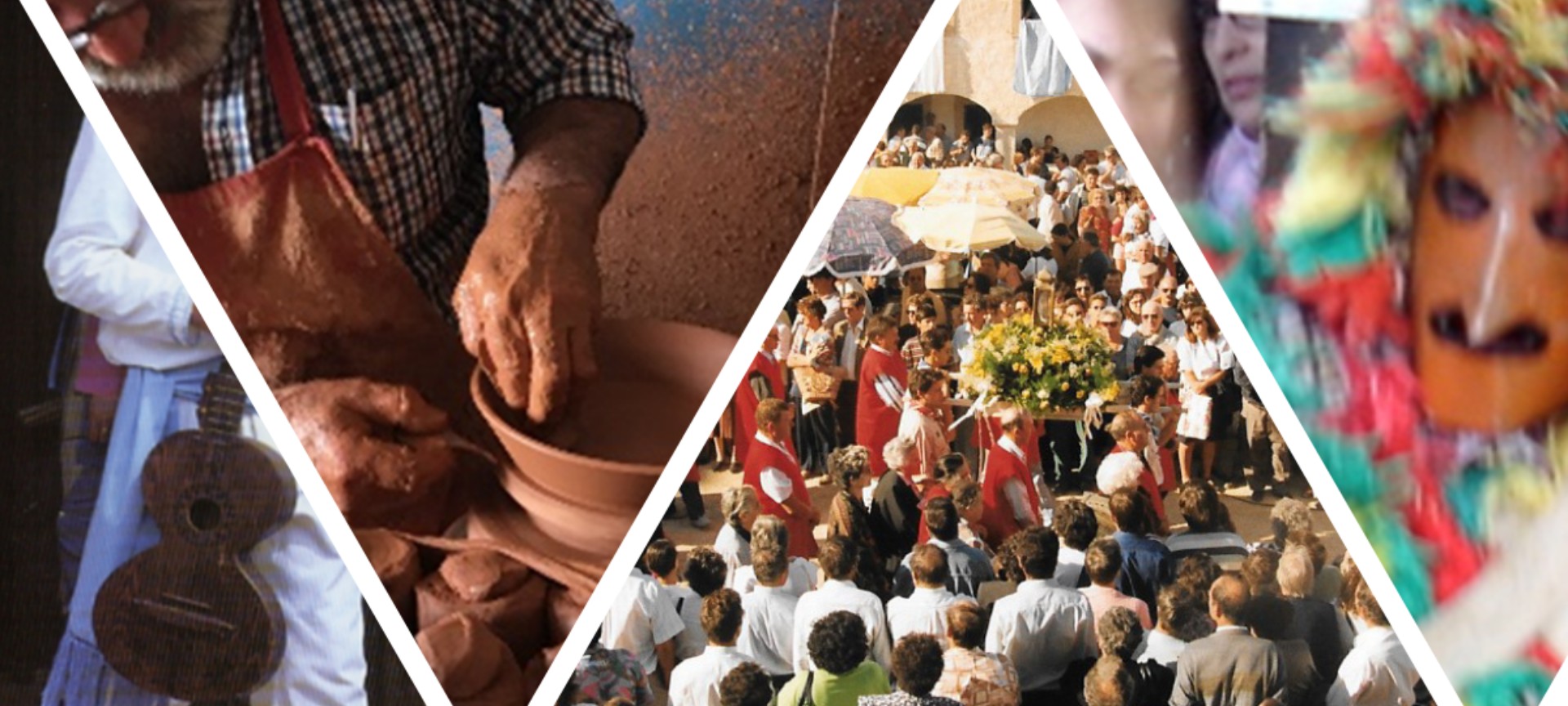
Masters Imaterial Cultural Heritage
The concept of Intangible Cultural Heritage (ICH), which has gained prominence especially in the 21st century, lacks a higher education framework. It is this serious gap¿evident in key sectors of national activity¿that the Master¿s Program in Intangible Cu Read more
You can now choose to study at your own pace and complete your master’s or doctoral degree on either a full-time or part-time basis.
This option is available for master’s and doctoral programmes worth 90 ECTS credits or more.
Tuition fees are calculated according to the number of ECTS credits in which you enrol.
Please refer to Article 16 of the Academic Regulations or contact the relevant services for further information.
Course formatIn-Person
DegreeMasters
Semesters4
Credits120
-
What will I learn in this course?
What will I learn in this course?
The concept of Intangible Cultural Heritage (ICH), which has gained prominence especially in the 21st century, lacks a higher education framework. It is this serious gap¿evident in key sectors of national activity¿that the Master¿s Program in Intangible Cultural Heritage now aims to fill. Thus, this Master¿s program aims to equip students with a theoretical and methodological framework that will enable them to address the various dimensions of intangible cultural heritage, as well as to develop the ability to generate knowledge by understanding, interpreting, and devising approaches consistent with this specific aspect of heritage, in accordance with UNESCO¿s recommendations as set forth in the Convention for the Safeguarding of Intangible Cultural Heritage (2003).
-
Entry requirements and conditions
Entry requirements and conditions
The following are eligible to apply a) Holders of a bachelor's degree or legal equivalent awarded by a national higher education institution in the areas of Anthropology and Sociology and other related areas; b) Holders of a foreign higher academic degree awarded following a 1st cycle of studies organised in accordance with the principles of the Bologna Process by a State adhering to this Process, in the areas of Anthropology and Sociology and other related areas; c) Holders of a foreign higher academic degree that is recognised by the Scientific Council as satisfying the objectives of the Bachelor's degree in the areas of Anthropology and Sociology and other related areas; d) Holders of an academic, scientific or professional curriculum recognised by the Scientific Council as attesting to their ability to complete this cycle of studies.
-
Seriation Criteria
Seriation Criteria
- 20% - Mestrado - Carta de Motivação
- 20% - Mestrado - CV
- 60% - Mestrado - Habilitação Anterior
Candidatos estrangeiros
- 50% - Mestrado - Carta de Motivação
- 50% - Mestrado - CV
-
Profile of the candidates for whom the course is intended
Profile of the candidates for whom the course is intended
To all those interested in the PCI¿namely institutions, researchers, elected officials of local government bodies, professionals and students in the field of cultural heritage, educators, senior staff at museums, libraries, and tourism services, members of brotherhoods, cultural heritage preservation associations, ethnographic folk groups, etc.¿ who wish not only to gain a more objective understanding of the concept but also to act in accordance with Portuguese law and the UNESCO Convention itself. The aim is also to address the aspirations of graduate students in Intangible Cultural Heritage (ICH).
-
Technical and professional skills that I will acquire
Technical and professional skills that I will acquire
Gain an understanding of cultural heritage and ICH from a dynamic perspective; provide practical tools for defining strategies to safeguard ICH; analyze best practices in safeguarding ICH; acquire skills in identifying, surveying, inventorying, recording, collecting, preserving, and disseminating ICH; participate in field research in the area of intangible cultural heritage; conduct research independently; apply acquired knowledge to ¿case studies¿; develop ICH itineraries; tailor ICH itineraries to the specific needs of target groups; participate in working groups focused on heritage promotion and enhancement.
-
Main reasons for choosing this course on ULusófona
Main reasons for choosing this course on ULusófona
- Acquire competences in the area of Intangible Cultural Heritage.
-
Study plan and curriculum structure
Study plan and curriculum structure
-
1º Ano / Common Core
- [1º Semestre]
-
Folklore and Folklorization
7 ects -
Inventory and Museums
8 ects -
The Culture of Oral Tradition
7 ects -
Theoretical Introduction to Intangible Cultural Heritage
9 ects
- [2º Semestre]
-
Religious Communities and Traditions
7 ects -
Scientific Research Methodology
5 ects -
Socioanthropology and Intangible Cultural Heritage
7 ects -
Workshop
10 ects
-
2º Ano / Common Core
- [Anual]
-
Dissertation
45 ects
- [1º Semestre]
-
Fieldwork and Research Methodology in ICH
15 ects
-
1º Ano / Common Core
-
Course Team
Course Team
-
Career opportunities and career prospects
Career opportunities and career prospects
Preparation of nominations for the ¿National Inventory of Intangible Cultural Heritage¿ and UNESCO lists (¿Representative List of the Intangible Cultural Heritage of Humanity,¿ ¿List of Intangible Cultural Heritage in Need of Urgent Safeguarding,¿ and ¿Register of Best Practices¿); development of ¿Municipal Plans for the Safeguarding of Intangible Cultural Heritage¿; research and teaching in the field of ICH; providing support to central, regional, and local public entities; municipal cultural departments; and working with museums, public libraries, and tourism services (including tour guides).
-
Scientific areas of the course
Scientific areas of the course
Sociologia e outros estudos
-
Observations
Observations
Scheduled Hours: Friday from 5:00 p.m. to 8:00 p.m. and Saturday from 9:00 a.m. to 12:00 p.m. and from 1:00 p.m. to 7:00 p.m.
Lisboa | F. Ciências Sociais, Educação e Adm.
Current Application Dates
Fees
Course Direction
Secretariat
-
Telephone extension636
-
LocationC.1.24
-
Service hours2ªf a 6ªf - 10h30 às 13h/14h30 às 17h
Agência de Avaliação e Acreditação do Ensino Superior
Graduation Requirements
Have completed a total of 120 ECTS.
Related Content
Mobility for Students and Academic Staff
Taking part in a mobility programme is the perfect opportunity to broaden your horizons through a rich cultural, academic and personal experience.
Learn more
Learn more









