


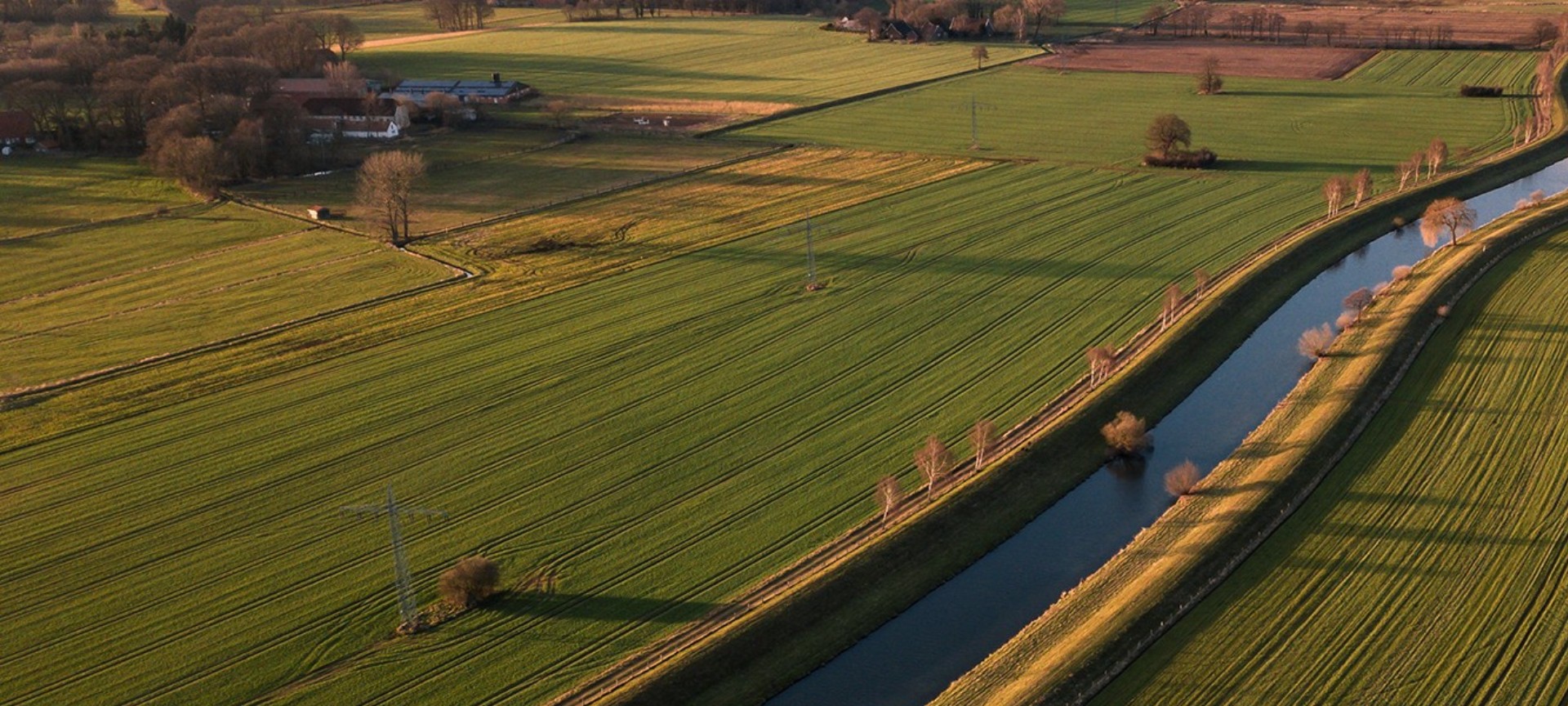
Masters Applied Data Science to Geographical Information Systems
Data Science is a recent discipline that has responded to the recent need to interpret the large volumes of data that technological advances have brought to society. Within the framework of the European Community's 2030 objectives, which focus on sustainab Read more
You can now choose to study at your own pace and complete your master’s or doctoral degree on either a full-time or part-time basis.
This option is available for master’s and doctoral programmes worth 90 ECTS credits or more.
Tuition fees are calculated according to the number of ECTS credits in which you enrol.
Please refer to Article 16 of the Academic Regulations or contact the relevant services for further information.
Course formatIn-Person
DegreeMasters
Semesters4
Credits120
-
What will I learn in this course?
What will I learn in this course?
Data Science is a recent discipline that has responded to the recent need to interpret the large volumes of data that technological advances have brought to society. Within the framework of the European Community's 2030 objectives, which focus on sustainability, sectors such as precision agriculture, fisheries, geospatial data monitoring, maritime activities, infrastructure monitoring, the environment and land management can benefit from specialists in analysing data from Geographic Information Systems. As a response and within the strategy of ULP and ULHT, the master's course incorporates two competences with a view to specialising Data Scientists in Geographic Information Systems.
-
Entry requirements and conditions
Entry requirements and conditions
Candidates with a background in Computer Science, Statistics, Physics, Mathematics, Geographical Engineering, Civil Engineering, Aerospace Engineering, Management, Economics or related fields may apply for the study cycle leading to a master's degree: a) holders of a bachelor's degree or legal equivalent; b) holders of a foreign academic degree awarded following a 1st cycle of studies organised in accordance with the principles of the Bologna process by a State adhering to that process; c) holders of a foreign higher academic degree that is recognised as satisfying the objectives of a bachelor's degree by the statutorily competent body; d) holders of an academic, scientific or professional curriculum that is recognised by the competent statutory body of Centro Universitário de Lisboa and Centro Universitário do Porto as attesting to their ability to complete this cycle of studies.
-
Seriation Criteria
Seriation Criteria
- 100% - Mestrado - Apreciação Curricular
Candidatos sem classificação da habilitação anterior
- 100% - Mestrado - Apreciação Curricular
-
Profile of the candidates for whom the course is intended
Profile of the candidates for whom the course is intended
Holder of a degree from a cycle of studies including various branches of engineering, such as Environment, Computer Science, Mathematics, Physics, Geophysics, Geology and related areas.
-
Technical and professional skills that I will acquire
Technical and professional skills that I will acquire
Software engineering and programming for Data Sciences; Geographic Information Systems (Geography and Cartography; Meteorology and Climatology); Data Science for Forestry and Agricultural Applications (GIS for the ocean); Statistics for Data Science; Machine Learning and Data Mining.
-
Main reasons for choosing this course on ULusófona
Main reasons for choosing this course on ULusófona
- The curriculum of the master's programme in data science and geographic information systems (GIS) focuses on the exploration and engineering of data and signals from aerial and spatial platforms.
- The master's degree aims to address these issues in order to present a technological study cycle (master's degree) geared towards the sustainability of digital information from geographic information systems.
- The specialisation in data science and GIS aims to train this new profile of professionals, which is in growing demand in the labour market (industry and academia).
-
Study plan and curriculum structure
Study plan and curriculum structure
-
1º Ano / Common Core
- [1º Semestre]
-
Applied Programming for Data Science
7 ects -
Fundamentals of Statistics for Data Science
7 ects -
Geographic Information Systems
7 ects -
Introduction to Data Science
7 ects -
Orientation Seminar
2 ects
- [2º Semestre]
-
Geography and Cartography
7 ects -
GIS Applied to the Ocean
7 ects -
Information Visualization
7 ects -
Meteorology and Climatology
7 ects -
Tutoring Seminar
2 ects
-
2º Ano / Common Core
- [1º Semestre]
-
Air Sensors and Photogrammetry
7 ects -
Data Science for Forestry and Agricultural Applications
7 ects -
Project Seminar
9 ects -
Topics on Machine Learning and its Applications
7 ects
- [2º Semestre]
- Dissertation Seminar or Project Work
-
1º Ano / Common Core
-
Options
Options
-
Career opportunities and career prospects
Career opportunities and career prospects
Data Scientist; Data Engineer; R, Python, C, C++ programmer; Geographic Information Systems Specialist; Big Data project manager;
-
Scientific areas of the course
Scientific areas of the course
Ciências informáticas
-
Observations
Observations
Planned start date: 17/10/2022. Application Deadline: 17/10/2022. Timetable: Evening, Daytime. Planned timetable: 18h00 to 22h00.
Lisboa | Esc.Comunicação, Arquitetura, Artes e TI
Current Application Dates
Fees
Course Direction
Secretariat
-
Telephone extension794
-
LocationU.3.5.2
-
Service hours2ªf a 6ªf - 10h às 12h e das 15h às 16h
Agência de Avaliação e Acreditação do Ensino Superior
Graduation Requirements
Have completed a total of 120 ECTS.
Mobility for Students and Academic Staff
Taking part in a mobility programme is the perfect opportunity to broaden your horizons through a rich cultural, academic and personal experience.
Learn more
Learn more









