


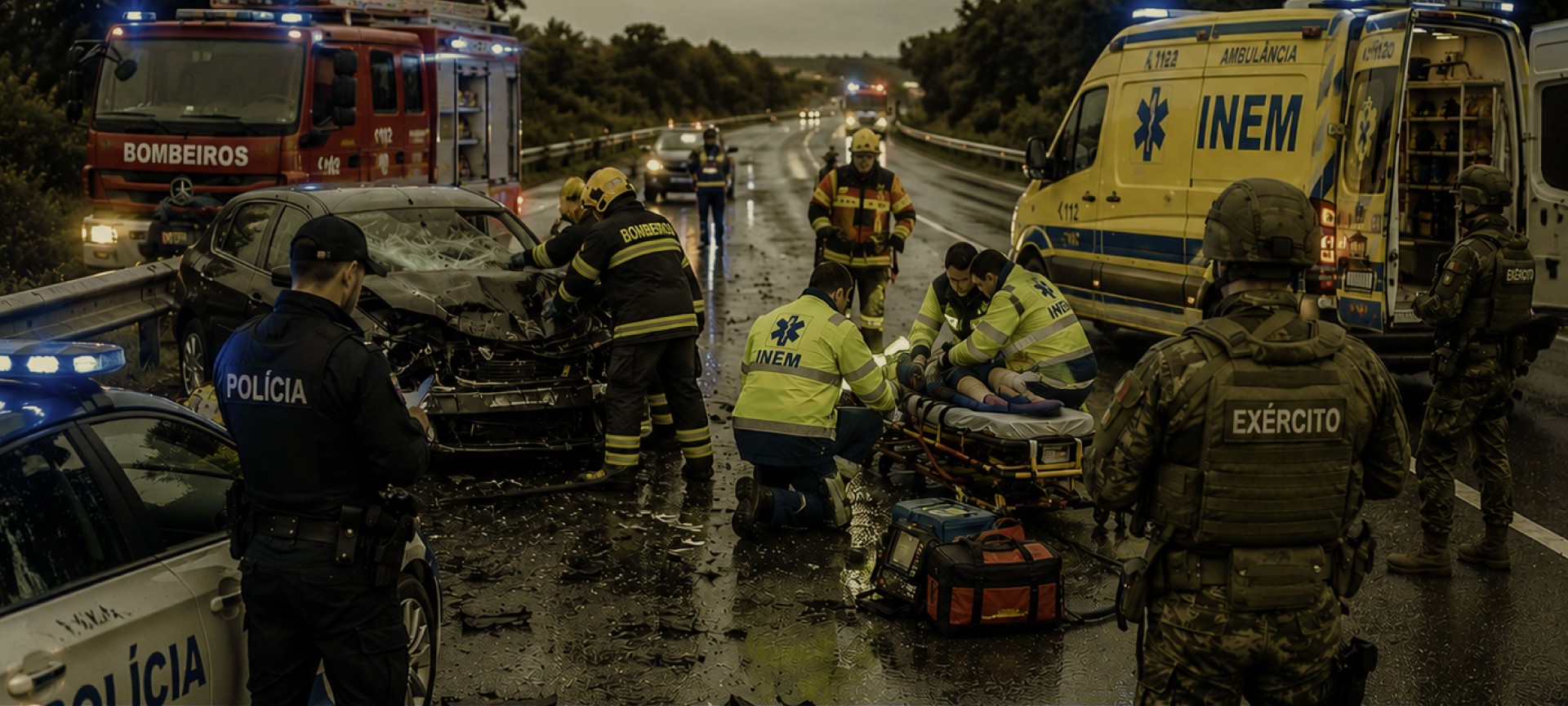
Postgraduation Integrated Emergency Management: Safety & Security
The Postgraduate Course in Integrated Emergency Management: Safety & Security has been developed with the aim of equipping professionals involved in emergency management ¿ specifically within civil protection agencies, the fire service, law enforcement age Read more
Course formatMixed
Hours100h
Credits12 ECTS
-
1st Edition, Academic Year 2026/2027
1st Edition, Academic Year 2026/2027
OngoingStart date 12 Oct, 2026End date 12 Dec, 2026Application start 15 May, 2026Application end 30 Sep, 2026
-
What will I learn in this course?
What will I learn in this course?
The Postgraduate Course in Integrated Emergency Management: Safety & Security has been developed with the aim of equipping professionals involved in emergency management ¿ specifically within civil protection agencies, the fire service, law enforcement agencies, local authorities and organisations responsible for essential services ¿ to work in an integrated manner across preparedness, response, coordination and recovery in complex crises. With a total of 100 hours, comprising 86 hours of distance learning and 14 hours of classroom-based learning, the course combines a conceptual and methodological framework with a strong practical component. The training covers core topics such as the functioning of operational coordination centres, inter-institutional coordination, operational safety, information management, crisis communication and decision-making using decision-support tools, namely operational information systems, scenario analysis models, risk matrices, situational dashboards and structured decision-making methodologies in contexts of uncertainty, integrating the perspectives of safety (management of unintentional risks) and security (intentional threats and disturbances to public order and safety) within a civil and functional framework.
-
Entry requirements and conditions
Entry requirements and conditions
A bachelor¿s degree or equivalent qualification. In exceptional cases, candidates without a bachelor¿s degree may be considered if they have relevant and proven professional experience in the fields of civil protection, security, emergency response, risk management or related areas, subject to an assessment of their CV.
-
Technical and professional skills that I will acquire
Technical and professional skills that I will acquire
1. Capacity for the integrated management of emergencies and complex crises, coordinating multiple agencies and levels of decision-making. 2. Proficiency in the operation and coordination of Operational Coordination Centres in multi-hazard contexts. 3. Advanced skills in decision-making under uncertainty, using structured decision-support tools. 4. Integration of safety and security perspectives into a civil, functional and operational approach. 5. Practical application of information management, crisis communication and operational safety in real and simulated environments.
-
Main reasons for choosing this course on ULusófona
Main reasons for choosing this course on ULusófona
- Developing advanced skills in integrated emergency management: The course provides an integrated overview of emergency and complex crisis management, equipping participants to plan and coordinate responses to multi-hazard events, liaising with different organisations, decision-making levels and stages of the emergency cycle.
- Strengthening inter-institutional and multi-agency coordination capacity: The training develops essential skills for working in multi-agency environments, strengthening coordination between civil protection, security forces, municipal services and organisations responsible for essential services, in contexts of high operational complexity.
- Improving decision-making in contexts of uncertainty and pressure: Trainees develop skills in informed decision-making, using structured decision-support tools, scenario analysis, risk matrices and operational information systems, which are essential in crisis situations and those characterised by high uncertainty.
- Integrating safety and security perspectives into a coherent approach: Integration of safety and security dimensions, enabling participants to simultaneously understand and manage unintentional risks, intentional threats and public order disturbances, within a civil, functional framework focused on the protection of people and property.
- Applying knowledge in practical and simulated contexts: The face-to-face component includes an integrated simulation exercise that enables students to apply theoretical knowledge to realistic scenarios, thereby consolidating learning, fostering teamwork and ensuring the effective transfer of skills to real-world intervention contexts.
- Enhancing and strengthening professional development in key areas: Attending the course contributes to the professional development of technical staff and managers, strengthening strategic and operational skills in areas critical to safety, civil protection, organisational resilience and emergency management.
-
Program
Program
- [1º Semestre]
-
Coordination and Decision-Making Centres in Critical Situations
3 ects -
Crisis Communication and Strategic Information Management
2 ects -
Integrated Emergency Management
2 ects -
Leadership and Decision-Making in Emergency Operations
2 ects -
Strategic Foundations of Integrated Emergency Management
3 ects
-
Course Team
Course Team
-
Career opportunities and career prospects
Career opportunities and career prospects
The Postgraduate Course in Integrated Emergency Management: Safety & Security equips graduates to perform technical, coordination and leadership roles in the context of preparedness, response and recovery to emergencies and complex crises, within multi-risk and multi-agency environments. Upon completion of the course, graduates will be able to take up roles within civil protection structures, specifically in municipal, regional or national services, as part of teams responsible for planning, operational coordination and the management of operational coordination centres. The course also prepares students for technical and middle management roles in fire services, security forces and other organisations with responsibilities in emergency management and public safety. In the public and private sectors, graduates may work as emergency managers, senior technicians or consultants in the areas of security, continuity of essential services, emergency planning and organisational resilience, including critical enterprises, essential infrastructure, concessionary entities and organisations with internal emergency plans. The training also equips participants with the skills to carry out duties in crisis management, emergency communications and information management units, as well as to design, plan and evaluate exercises and drills, compile lessons learnt and ensure the continuous improvement of response systems. In addition, they will be able to collaborate on projects involving risk analysis, decision support, inter-institutional coordination and the development of policies and emergency plans, integrating safety and security perspectives into a civil, functional approach focused on the protection of people, property and the environment.
-
Scientific areas of the course
Scientific areas of the course
Engenharia e técnicas afins
-
Observations
Observations
Continuous assessment, based on active participation in classroom activities, individual and/or group assignments, the resolution of practical case studies, and performance in the integrated face-to-face simulation exercise. The course will comprise 86 hours of distance learning and 14 hours of face-to-face teaching. The face-to-face component is compulsory and focuses on an integrated simulation exercise, aimed at consolidating learning and the effective transfer of knowledge to real-life operational intervention contexts.
Porto | Fac.Ciênc.Naturais,Engª e Tecnol.









